









when the clocks go back: how to help your body clock adjust
As the clocks go back, discover how the seasonal shift affects your sleep and the small changes that can help you adjust, with expert advice from Professor Gaby Badre and Lisa Artis, Deputy CEO of The Sleep Charity.

when do the clocks go back?
After a long, bright summer, the UK marks its transition into the colder months by shifting from British Summer Time to Greenwich Mean Time. At 2am on Sunday 25th October 2026, the clocks will 'fall back' by one hour, bringing lighter mornings, darker evenings and the familiar crisp air of autumn.
While the change technically gives us an extra hour in bed, adjusting to new timings, reduced daylight and shorter days can have a greater impact on how we feel than we might expect.
Even a small shift in our routine can influence our sleep, energy levels and overall wellbeing. So, why does the clock change affect our bodies, and what can we do to make the transition easier?

how does the clock change affect our bodies?
Our circadian rhythms are 24-hour cycles that form part of the body's internal clock, regulating essential functions including temperature, hormone levels, metabolism, appetite, sleep and wakefulness.
We all have a master clock that communicates with the many other clocks ticking throughout our bodies. This master clock, a group of nerve cells in the hypothalamus called the Suprachiasmatic Nucleus, is synchronised with the external light-dark cycle, sending signals to the rest of the body according to light cues.
Our body clock is particularly sensitive to light, especially blue light, which is why artificial light from our devices can significantly affect the quality of our sleep.
A sudden external change, such as the clocks going back, can temporarily leave our internal clocks out of sync. Bright light in the evening tends to push sleep later, while morning light helps signal that it's time to wake.
Yet modern life often encourages us to do the opposite of what our bodies naturally expect. We spend too little time in bright daylight and too much time exposed to artificial light after dark. During the winter months, this makes it even more important to consciously seek out light and darkness at the right times.
When our circadian rhythm is disrupted, our sleep-wake cycle can become unsettled, leaving us feeling groggy in the morning or struggling to fall asleep at night. Even small changes in sleep quality can affect our mood, concentration, focus and decision-making.

why consistency matters for your body clock
According to our expert neuroscientist Professor Gaby Badre, maintaining a consistent sleep schedule is an important part of supporting our natural circadian rhythm.
Speaking to Dr Anna Persaud on our getting on your nerves? podcast, Professor Badre explains the relationship between our internal body clock and the build-up of sleep pressure throughout the day.
"We have two systems which regulate our sleep, what we call the homeostatic system, which is sleep pressure ... and the second component is a circadian rhythm. They work together ... if you have a disconnection between these two ... it can impede your sleep ... As long as you keep the same rhythm, you can cope with that. The problem would be if you are changing."
Professor Gaby Badre, Associate Professor of Neuroscience and This Works sleep expert
In other words, our bodies respond best to a regular rhythm. When our sleep and wake times change, even by an hour, the relationship between our natural sleep pressure and circadian rhythm can be temporarily disrupted.
The good news? Small, consistent adjustments can help our bodies find their rhythm again.

the power of light
When the clocks go back, measured time instantly moves one hour earlier, but our internal body clock may take a little longer to catch up.
Everyone responds differently to the clock change, depending partly on whether they are naturally more of a 'morning' or 'evening' person. Morning people may find the autumn shift more challenging, while evening people can struggle more with the spring change.
Light is one of the most powerful signals we can use to support our body clock. Yet many of us don't get enough natural daylight during the day and are exposed to too much artificial light in the evening, whether from overhead lighting, phones, televisions or even streetlamps.
This evening light exposure can suppress melatonin, the hormone that helps signal to our brain that it's time for sleep.
As the days become shorter, making the most of natural daylight and creating a darker, calmer environment in the evening can help support our natural sleep-wake cycle.
small changes for better sleep
While the clock change is only an hour, its effects can feel different for everyone. The key is to approach the transition gradually rather than expecting your body to adjust overnight.
Lisa Artis, Deputy CEO and Director of Adult Sleep at The Sleep Charity, shares her advice:
"The clocks changing can affect us all differently, but even a one-hour shift can temporarily disrupt our body clock and sleep routine. The key is to be patient with yourself and focus on the basics: maintaining a consistent sleep schedule, getting plenty of natural daylight during the day, and creating a calm, relaxing bedtime routine. Small, positive adjustments can help your body adapt more easily and support better sleep as we move into the winter months."
Lisa Artis, Deputy CEO, The Sleep Charity
If you're struggling with your sleep, The Sleep Charity offers further advice and support through its website and National Sleep Helpline. Visit thesleepcharity.org.uk for more information.

how to ease the transition
There are a few simple actions you can take before and after the clocks go back to help your body adjust and keep your sleep on track.
By making small, conscious changes to your daily habits, you can support your circadian rhythm and create a smoother transition into the darker months.
front-load your light
Getting outside as close to your wake-up time as possible, ideally for 30–60 minutes of daylight exposure, can help anchor your circadian rhythm.
Even on cloudy autumn mornings, natural daylight provides an important signal to your brain and body clock. If getting outside isn't possible, try working near a bright window.
Getting outdoors again in the afternoon can also help reinforce the natural progression from daytime alertness to evening relaxation.
dim and warm your evenings
Around three hours before your target bedtime, begin lowering the lighting in your home. Switch off bright overhead lights and opt for softer, warmer lamps instead.
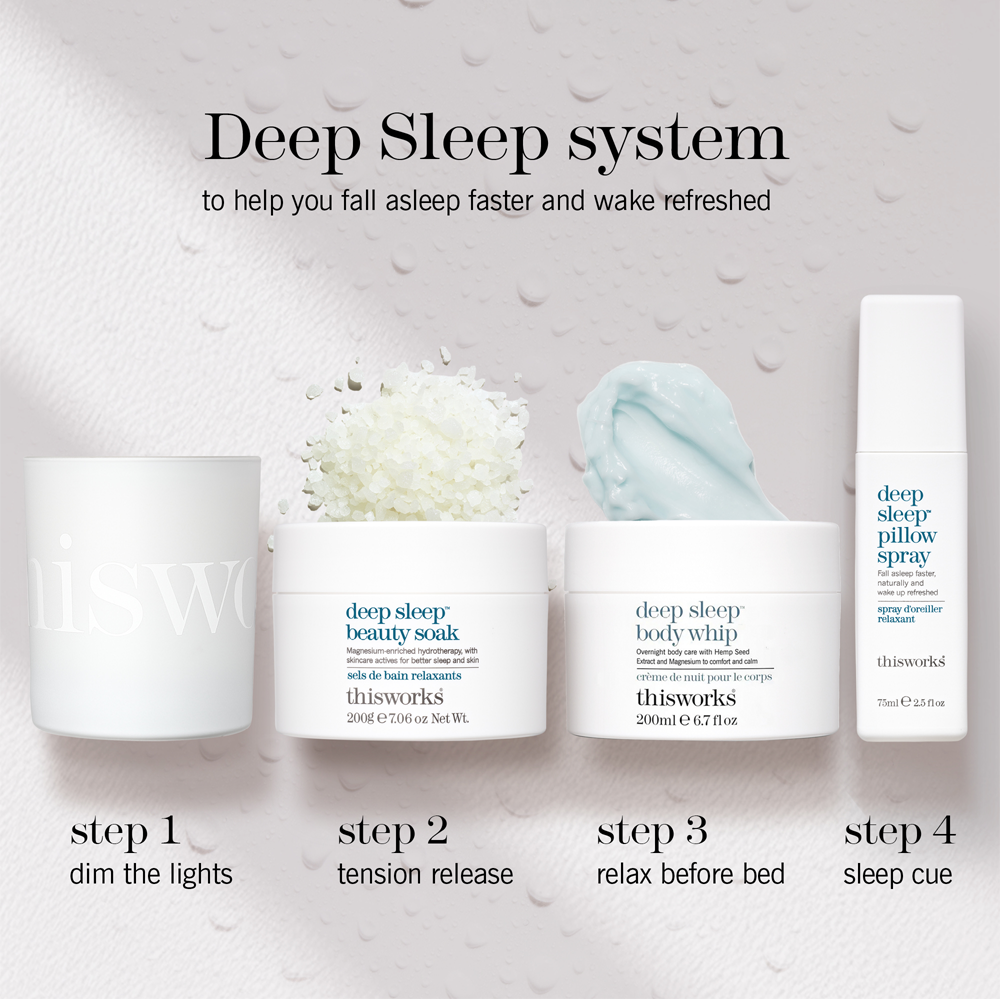
Or, even better, light a deep sleep heavenly candle to enjoy soft, flickering candlelight alongside the sleep-supporting Functional Fragrance of Lavender, Camomile and Vetivert.
This signature blend has been studied using fMRI technology, demonstrating activity in areas of the brain associated with relaxation and emotional processing, helping create the right environment to switch off.
switch off
Reduce your use of screens and digital devices, including televisions, phones and laptops, wherever possible in the evening.
While 'night mode' settings can help reduce blue light exposure, they don't replace the benefits of dimming your environment altogether.
Instead, try reading a paper book, listening to calming music or creating a little space away from your screen before bed.
Children can be particularly sensitive to evening light exposure, so introducing device curfews and dimmer lighting can also help make the transition easier for the whole family.

how to ease the transition cont.
nudge your schedule
Rather than making a sudden adjustment on the day, try gradually shifting your bedtime and wake-up time by 10–15 minutes over several days leading up to the clock change.
As the clocks go back, this means moving your routine slightly later to help your body adapt to the new time.
You may have seen this advice recommended for children, but small, gradual changes can be just as helpful for adults.
brush up your bedtime routine
A familiar evening routine can make a real difference to how easily you switch off at night.
Start with a warm bath or shower to mark the end of the day, followed by a few moments of self-care to help your mind and body unwind.
Massage deep sleep body whip into your skin for a moment of relaxation. Formulated with Magnesium and our signature Functional Fragrance of Lavender, Camomile and Vetivert, it helps turn an everyday skincare step into a calming evening ritual.
Keep your bedroom cool and as dark as possible, and choose breathable bedding to create a comfortable sleep environment.
Finally, before getting into bed, spritz your pillow with deep sleep pillow spray. Its clinically proven Functional Fragrance helps you fall asleep faster and wake feeling more refreshed, creating a familiar sensory cue that signals to your brain it's time to switch off.
find your rhythm this autumn
There are many small changes we can make to support better sleep as the seasons shift, but the most important thing is consistency.
Whether you're adjusting to the clocks going back, travelling across time zones or simply trying to improve your everyday sleep routine, natural daylight, darker evenings and familiar bedtime rituals can all help your body find its rhythm.
This autumn, make time to work with your body clock, not against it. Because better sleep starts long before your head hits the pillow.

related posts: sleep hygiene
 sleep hygienewhen the clocks go back: how to help your body clock adjustAs the clocks go back, discover how the seasonal shift affects your sleep and the small changes that can help you adjust, with expert advice from Professor Gaby Badre and Lisa Artis, Deputy CEO of The Sleep Charity.read post
 expertsgetting on your nerves? episode 5: the September switchIn episode 5 of getting on your nerves?, Dr Anna Persaud is joined by medical doctor Dr Lana Gault to explore the September switch – how the transition from summer into autumn affects our physical health, mental wellbeing, sleep and...read post
 expertsgetting on your nerves? bonus episode: getting out of your head, into your bodyIn this Wellness Weekender special of getting on your nerves?, Dr Anna Persaud is joined by wellness expert and integrative therapist Esther Triviño to explore somatic yoga, interoception, nervous system regulation and how movement, breath, sound and sensory cues can...read post
 expertsgetting on your nerves? episode 4: wherever I lay my hatWhy can some people sleep anywhere, while others struggle as soon as their surroundings change? Dr Anna Persaud and Professor Gaby Badre explore sleep adaptability, circadian rhythm, nervous system regulation and how to become a more resilient sleeper when conditions...read post
 expertsgetting on your nerves? episode 1: signs you are stressedIn episode 1 of getting on your nerves?, Dr Anna Persaud is joined by medical doctor Dr Lana Gault to explore how stress first shows up in the body and mind. From burnout, fatigue and disrupted sleep to fight or...read post
 expertsgetting on your nerves? episode 3: the power of nowIn episode 3 of getting on your nerves?, Dr Anna Persaud is joined by psychotherapist and trauma expert Lauren Baird to explore why being present can feel so difficult. From negativity bias, fight or flight and the window of tolerance...read post
 sleep hygienecan you train your brain for bedtime?Can a familiar scent become a signal that it is time to sleep? Professor Gaby Badre explores the connection between scent, the brain and nervous system — and how repeated sensory cues may help support the transition from daytime alertness...read post
 sleep hygienewhen the brain won’t switch off: understanding chronic insomniaWhy can sleep remain difficult long after the original trigger has passed? Professor Gaby Badre explores the science of chronic insomnia, the hyperarousal that can keep the brain alert at night, and how the brain can be retrained for sleep.read post
