





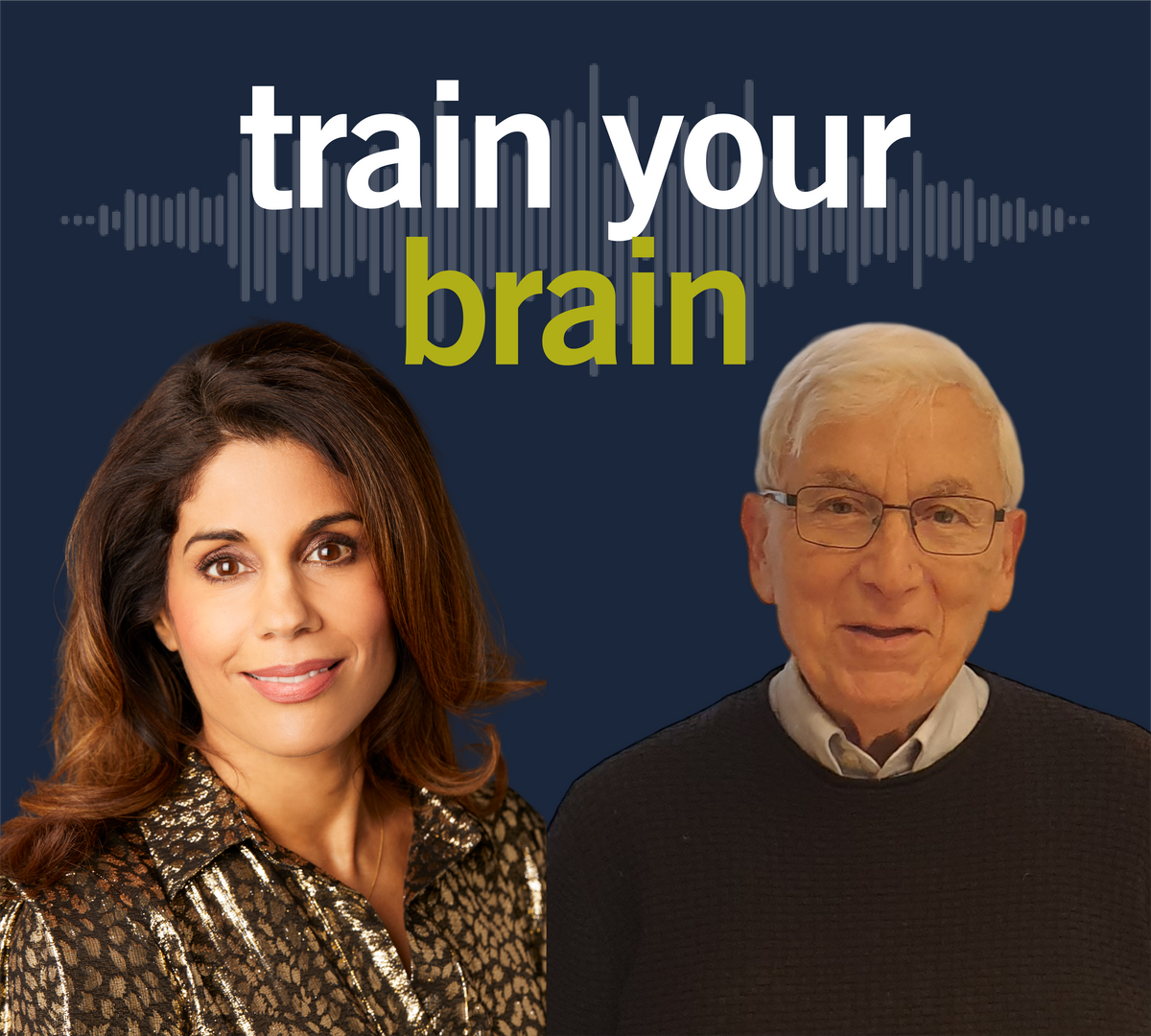
getting on your nerves? episode 6: train your brain
In episode 6 of getting on your nerves?, Dr Anna Persaud is joined by sleep and neuroscience expert Associate Professor Gaby Badre to explore whether we can train our brains to sleep better. From chronic insomnia and the science of sleep pressure to circadian rhythms, nervous system hyperarousal and the role of Functional Fragrance, they explore why sleep can become difficult and how we can begin to rebuild a healthier relationship with rest.

part 1: understanding chronic insomnia and why sleep problems develop
why sleep has become such a problem
Anna: Welcome to getting on your nerves?, our podcast dedicated to understanding more about the nervous system and what we can do to help manage it.
Today, I'm joined by Associate Professor Gaby Badre, who I've had the pleasure of working with for nearly eight years.
Gaby is a medical doctor, neuroscientist, clinician and academic with extensive expertise in circadian rhythms and sleep science. He's also someone This Works has partnered with professionally in our research and development over the years.
You've flown in from Sweden, so thank you so much for joining me.
Today, we're going to explore some of the myths around sleep and how to get better sleep. We'll look at what chronic insomnia actually is, how we recognise it and what we can do about it.
We're also going to cover the basics of sleep, including circadian rhythm, the role of light and sleep pressure.
And importantly, if we've built negative associations with bedtime and going to sleep, is there such a thing as being able to retrain the brain and nervous system so that we can sleep better?
Let's start with the basics. What do we need to know about sleep?
Professor Badre: I've devoted the last 20 to 30 years to sleep.
When I first started working in this field, people used to laugh. They would say, "What, sleep? You're a dream doctor!"
Today, I'm happy that sleep is taken much more seriously, but I'm also sorry that there are so many sleep problems.
Modern lifestyles are creating different types of sleep difficulties. People are constantly running. They don't have time to slow down or switch off.
We see these problems in older people, adults and young people. It's become a very significant social problem.
That's why it's so important to address sleep difficulties efficiently.
what is chronic insomnia?
Professor Badre: First, we need to understand that there is insomnia and there is chronic insomnia.
Everybody can experience a bad night's sleep from time to time because of their circumstances.
Perhaps you're stressed, travelling or going through a difficult period.
That doesn't necessarily mean you have chronic insomnia. Often, your sleep will recover after a day or two, or once the situation has changed.
When we talk about chronic insomnia, we generally look at sleep difficulties occurring at least three times a week for three months or longer.
Those difficulties may include:
• Problems falling asleep.
• Problems maintaining sleep or waking repeatedly during the night.
• Waking earlier than intended.
• Feeling that sleep hasn't been restorative.
These symptoms also need to be considered alongside how the person is functioning during the day.
Anna: So if someone is experiencing disturbed or poor-quality sleep at least three times a week, over three consecutive months, and it's affecting their wellbeing, that's when they should consider seeking medical advice?
Professor Badre: Exactly.
It's important to recognise the problem and investigate what might be causing it.
Anna: And there are lots of medical conditions that can contribute to insomnia, aren't there?
Professor Badre: Yes. We call these comorbidities.
Psychiatric conditions, medications, hormonal disorders and other medical problems can all increase the risk of insomnia.
We have to understand the whole picture rather than treating every sleeping problem in the same way.
the three Ps of insomnia
Professor Badre: When a patient comes to see me, I spend a significant amount of time understanding what we call the three Ps of insomnia.
The first is predisposing factors.
Some people may have a genetic predisposition to developing sleep problems. Insomnia can occur within families.
But we shouldn't confuse this with someone who is naturally a short sleeper.
Some people need less sleep than others and may function well on six or seven hours. That doesn't automatically mean they have insomnia.
The second P is precipitating factors.
These are events or circumstances that trigger a sleep problem.
It might be a divorce, financial difficulties, an illness, bereavement or a disruption to circadian rhythm.
We all experience difficult situations in life, and it's natural for sleep to be affected temporarily.
The problem arises with the third P: perpetuating factors.
This is when something that should have disappeared after a period of time continues.
The original cause of the insomnia might have passed, but the sleeping difficulty remains.
You enter into a cycle.
Anna: That's really interesting.
So when you see a patient, you're looking at whether these three factors are at play: predisposition, precipitating factors and perpetuating factors.
I imagine the perpetuating factor is particularly difficult because, even when the original trigger is gone, the problem continues.
Professor Badre: Exactly.
There may have been an event such as a traumatic experience, a difficult childbirth, a death in the family or another significant disruption.
It's understandable that someone might experience insomnia afterwards.
But ideally, that difficulty should resolve as the person recovers.
When it continues, we need to understand what's maintaining it and try to interrupt that cycle.
the role of medication and CBT-I
Anna: Let's explore the treatment of chronic insomnia.
You've worked with many people experiencing stress, burnout and prolonged sleep difficulties.
What role should medication play?
Professor Badre: When someone comes to me with chronic insomnia, we need to decide on the most appropriate approach.
Medication can sometimes be useful in helping interrupt the cycle, but medication alone is not enough.
We also use cognitive behavioural therapy for insomnia, known as CBT-I.
This helps address the thoughts and behaviours that may be contributing to the problem.
In some clinical situations, medication and CBT-I may be used together.
But the approach has to be individualised.
One of the first things I try to establish is whether there is any periodicity to the person's sleep.
For example, they might sleep badly for three or four nights and then suddenly have two better nights.
I actually find that quite encouraging.
It suggests that their sleep system can still generate a better night's sleep, perhaps because sufficient sleep pressure has accumulated.
Anna: So even when someone is struggling with insomnia, the fact that they occasionally sleep well can tell you something useful about their underlying ability to sleep?
Professor Badre: Yes.
I also want to understand exactly what kind of sleep difficulty they're experiencing.
Are they struggling to fall asleep?
Are they waking repeatedly?
Are they waking too early?
Or are they sleeping but not feeling refreshed?
If someone wakes after three or four hours, for example, they may already have experienced some of the deeper sleep that tends to occur earlier in the night.
Sleep naturally becomes shallower as the night progresses.
That information helps us understand the problem.
why a sleep diary can reveal so much
Professor Badre: I usually ask patients to complete a sleep diary for two weeks, including weekends.
The weekends are particularly important.
Many people, especially younger adults, build up sleep deprivation during the working week.
They might go to bed at eleven and need to wake at six.
If they need more sleep than that, they gradually accumulate a sleep debt.
By Friday, they may have lost several hours.
Then Friday and Saturday arrive.
They go out, enjoy themselves, stay awake until two or three in the morning and sleep until midday.
On Sunday, they try to return to their normal schedule because they have work or university the following morning.
It's almost like flying to New York and back every weekend.
Anna: So they're creating a form of jet lag without actually travelling anywhere.
Professor Badre: Exactly. We call it social jet lag.
The sleep-wake schedule shifts between weekdays and weekends.
Some healthy people can tolerate that reasonably well.
But if someone is already experiencing emotional difficulties, illness or other stressors, it may contribute to further sleep problems.
Anna: I think that's particularly relevant for young people going back to university, where there are lots of late nights and changes in routine.
It's interesting to think about how we accumulate sleep debt and then try to compensate for it at the weekend, potentially disrupting our circadian rhythm in the process.
part 2: sleep pressure, circadian rhythm and the hyperaroused brain
the two systems that regulate sleep
Anna: Let's return to something you mentioned earlier.
If someone develops a habit of waking at three in the morning, perhaps following a stressful period, how does that become a pattern?
And how do we begin to break it?
Professor Badre: First, we need to understand why we sleep.
There are two major systems involved in regulating sleep.
The first is the homeostatic system, which generates sleep pressure.
From the moment we wake up, sleep pressure gradually builds throughout the day.
The longer we've been awake, the greater that pressure becomes.
The second system is our circadian rhythm, our internal biological clock.
These two systems work together.
Ideally, sleep pressure is high at a time when the circadian rhythm is also promoting sleep.
If they become disconnected, sleep can become difficult.
You may have enough sleep pressure but be trying to sleep at the wrong biological time.
Or your circadian rhythm may be signalling that it's time for sleep, but you haven't built up enough sleep pressure.
Anna: So good sleep isn't simply about feeling exhausted.
It's about these two biological systems working together at the right time.
insomnia as a state of hyperarousal
Professor Badre: Exactly.
Another important concept is that chronic insomnia is often associated with hyperarousal.
There are different components to this.
We can have arousal within the brain itself, and we can have arousal within the autonomic nervous system.
The autonomic nervous system regulates many of the body's automatic processes, including our responses to stress and relaxation.
The sympathetic nervous system is associated with alertness and fight or flight.
When that system is more active than we need it to be, it can become difficult to transition into sleep.
Anna: So the sympathetic nervous system is more dominant?
Professor Badre: Yes, but there are other systems involved too.
One is the hypothalamic-pituitary-adrenal axis, or HPA axis.
This is part of the body's stress-response system.
Signals from the brain ultimately influence the adrenal glands and the release of cortisol.
Cortisol is important for alertness.
There can also be increased activity in the brain itself.
When we examine the electrical activity of the brain, we may see patterns associated with greater cortical arousal.
And then we have conditioning.
If you've learned that going to bed is something stressful, that can increase your alertness even further.
You start thinking:
"I have to sleep."
"If I don't sleep, I won't be able to work tomorrow."
"If I wake up again, tomorrow will be terrible."
These thoughts can become part of the problem.
Anna: So we have the physiological activation, the stress-response systems and then the learned behaviour.
The more we worry about not sleeping, the more alert we become.
And the more alert we become, the harder it is to sleep.
Professor Badre: Exactly.
That's why sleep education is so important.
We need to help people understand what's happening rather than allowing fear about sleep to make the situation worse.
understanding cortisol and waking at 3am
Anna: Let's talk about cortisol because I think it's often misunderstood.
Cortisol isn't inherently bad.
It's fundamental to our biology.
It helps us wake up, become alert, face challenges and prepare for the day.
But we don't necessarily want the same level of activation during the night.
Professor Badre: Cortisol normally follows a daily rhythm.
It tends to rise towards the morning, helping us prepare for waking, and generally decreases later in the day.
But in some circumstances, stress-response activity and sleep-wake regulation can become disrupted.
There are several systems working together, including the HPA axis, autonomic nervous system and brain arousal.
Anna: So if someone is already highly activated in the evening, they may struggle to switch off.
Then, if they wake at three in the morning, they might immediately start worrying.
They check their phone, expose themselves to light, think about the following day and become increasingly alert.
Suddenly, waking at three becomes something they anticipate and fear.
Professor Badre: Exactly.
And this is where I always tell you something very important.
De-dramatise the situation.
Anna: You always say that to me!
I feel like I need a T-shirt that says "de-dramatise".
But it's such good advice.
what to do when you wake in the night
Professor Badre: I actually have a slightly different opinion from some of my colleagues on this.
A common recommendation is that if you wake during the night and can't fall asleep, you should leave the bed and do something else until you feel sleepy.
There are situations where that can be appropriate.
But I don't think it should automatically be the response every time someone wakes.
If you get out of bed, turn on the television or start doing something stimulating, you may increase your alertness.
And we have to remember that waking briefly during the night is normal.
Sleep becomes shallower later in the night.
We all experience small awakenings, but often we don't remember them.
We might simply turn over and fall asleep again.
Anna: So rather than immediately interpreting waking as a problem, we need to understand that it's part of normal sleep.
Professor Badre: Exactly.
Our sleep is influenced not only by circadian rhythm but also by shorter cycles, which we call ultradian rhythms.
Sleep moves through different stages during the night.
I sometimes describe opportunities to return to sleep as sleep gates.
If you become too alert, you may miss the next opportunity to drift off.
That's why I encourage patients not to panic.
You can give your brain something simple, neutral or mildly interesting to think about rather than becoming preoccupied with the fact that you're awake.
The important thing is not to turn a normal awakening into a stressful event.
Anna: So the message is not to force sleep, but to avoid escalating the situation.
Don't immediately reach for your phone or start worrying about the consequences of being awake.
Professor Badre: Yes. De-dramatise.
how stimulants and late meals affect sleep
Anna: Let's explore sleep pressure a little further.
How do things like caffeine and nicotine affect our ability to sleep?
Professor Badre: We have to look at anything that increases alertness.
Caffeine can increase alertness and interfere with sleep, particularly when consumed later in the day.
Nicotine is also a stimulant.
That includes smoking and other nicotine-containing products.
We also need to consider what we're eating and when we're eating it.
If you eat a large meal late at night, digestion can become uncomfortable.
Some foods may cause bloating, gas or heartburn.
Spicy food, for example, can contribute to discomfort in some people.
All of these things can increase arousal or make it more difficult to settle.
Anna: So it's about recognising that sleep is affected by what happens throughout the day, not just what happens when we get into bed.
Professor Badre: Exactly.
Sleep pressure builds during wakefulness.
We need to allow that process to happen and try to keep it aligned with our circadian rhythm.
If someone wakes at midday, their sleep pressure will develop on a very different schedule from someone who wakes at six or seven in the morning.
Consistency matters.
Even people who work unusual hours can sometimes adapt to a stable schedule.
The difficulty often comes when that schedule is constantly changing.
the gut-brain connection and sleep
Professor Badre: There's another important relationship we need to consider: the connection between the brain and the gastrointestinal system.
The gut and brain communicate closely.
We have the central nervous system, the autonomic nervous system and the enteric nervous system within the gastrointestinal tract.
The gut contains a complex network of nerves and is closely connected to the brain.
The microbiome also plays an important role in our biology.
I often tell my patients to think of their body as a hotel with millions of guests.
Those guests need to be happy.
If they're not happy, they complain!
Anna: I love that analogy.
Professor Badre: The vagus nerve is an important part of the communication between the brain and many internal organs, including the digestive system.
Signals travel in both directions.
Our emotional state can affect digestion, and gastrointestinal discomfort can influence how we feel.
That's one reason we sometimes see sleep difficulties alongside conditions such as irritable bowel syndrome.
Someone experiencing IBS may also struggle with sleep, and the relationship can work in both directions.
Anna: I think this is such an important point.
Until relatively recently, many people didn't fully appreciate the connection between gut health, mental wellbeing and sleep.
We need to think about how we support our microbiome, the nutrients we eat and the timing of our meals.
If we're asking the digestive system to work hard overnight, or we're eating foods that cause discomfort, that may affect our ability to rest and recover.
Sleep hygiene is about much more than just the bedroom.
part 3: how to train your brain to move from tired to sleepy
why being tired isn't the same as being sleepy
Anna: There's something you've taught me that I think is really important.
Being tired and being sleepy are not the same thing.
I often say, "I'm absolutely exhausted."
I'll go home, lie on my bed and feel completely drained.
But there's no way I'm going to sleep.
I'm tired but wired.
Professor Badre: Exactly.
When you're tired, you may have a lack of energy.
You may be physically or mentally exhausted.
But that doesn't necessarily mean you're sleepy.
You can be exhausted and still be hyperalert.
Sleepiness is different.
When you're genuinely sleepy, you begin to yawn.
Your eyelids become heavy.
You feel yourself drifting towards sleep.
I sometimes ask patients to imagine sitting alone in a waiting room.
There's dim lighting, no phone, no magazine and nothing particularly stimulating to do.
Would you fall asleep?
That helps us think about the difference between fatigue and sleepiness.
Anna: So tiredness can be linked to the demands we've placed on our bodies and minds.
But sleepiness is more closely connected to our sleep pressure and circadian rhythm.
We might need rest, hydration, nourishment or a pause during the day without necessarily needing to sleep.
Then, in the evening, we want to be able to make that transition from being tired to becoming sleepy.
Professor Badre: Exactly.
And that transition isn't always easy, particularly when someone is highly activated.
understanding your chronotype
Professor Badre: We also need to recognise that people are different.
We have different personalities and different chronotypes.
Some people naturally feel more alert in the morning.
Others feel more alert later in the evening.
These are sometimes described as morning types and evening types, or larks and owls.
There has been research looking at the potential long-term consequences for people whose natural chronotype doesn't align with the schedules they have to follow.
For example, someone who is naturally an evening type may find it particularly difficult to wake very early for work every day.
Anna: So if you're naturally an owl but society requires you to behave like a lark, you may experience a mismatch between your biology and your daily schedule.
Professor Badre: Yes.
Ideally, people would have some flexibility to organise their lives around their biological rhythms.
Of course, that isn't always possible.
But understanding your chronotype can help you make more informed decisions about sleep.
why falling asleep on the sofa can affect bedtime
Professor Badre: Another common problem is dozing in front of the television.
Someone sits down in the evening.
The lighting is dim, the programme isn't particularly interesting, and they start to drift off.
They might doze several times.
Then they decide it's time to go to bed, but suddenly they're no longer sleepy.
They've reduced some of their sleep pressure.
I compare it to eating snacks throughout the day.
If you keep eating little snacks, you might not be hungry when it's time for dinner.
Sleep pressure can work in a similar way.
Anna: That's such a useful analogy.
So if we want good-quality sleep overnight, we should be mindful of those little periods of dozing on the sofa.
They might feel relaxing, but they can interfere with the sleepiness we want to experience at bedtime.
Professor Badre: Exactly.
And there's another practical point.
If you're watching television in the evening and you begin to feel sleepy, you should ideally already be prepared for bed.
If you still need to brush your teeth, prepare your clothes for tomorrow and complete several other tasks, you might spend another 20 or 25 minutes becoming active again.
By the time you finally get into bed, that feeling of sleepiness may have passed.
Anna: So do your preparation earlier.
Then, when you feel sleepy, you can actually go to bed.
Professor Badre: Yes.
when sleep routines become another source of stress
Anna: At This Works, we talk a lot about building routines and creating familiar sensory cues that help the brain associate certain experiences with relaxation.
Can the brain learn these associations?
Professor Badre: Yes, but I want to make an important distinction.
I tell my patients not to stress themselves by trying too hard to fall asleep.
Sometimes people get into bed and think:
"I must do my breathing exercises."
"I must meditate."
"I must relax."
"I must fall asleep now."
But if you're putting pressure on yourself to do all of these things, you may actually increase your alertness.
Relaxation should not become another task you have to perform.
Anna: That's so important.
We're talking about building helpful routines, but if those routines become obligations, they can have the opposite effect.
Professor Badre: Exactly.
There should be no "must" in bed.
If you're naturally an evening person and you're not sleepy at nine o'clock, don't force yourself to go to bed at nine.
Try to respect your natural rhythm while making sure you allow enough time for sleep.
And remember to look at the bigger picture.
Hormonal changes, thyroid problems, menopause and other medical conditions can contribute to insomnia.
We should investigate these factors before assuming that changing someone's routine will solve everything.
why switching off during the day matters too
Professor Badre: There's another piece of advice I've given you many times, Anna.
You need to give yourself a break.
People with demanding jobs and responsibilities can spend their entire lives running from one thing to the next.
Everything is scheduled.
Everything has to be done.
I encourage people to give themselves a period of time, perhaps half a day every week or so, when they don't have to achieve anything.
Anna: You've been telling me that for years.
And I've tried to build it into my diary.
Every couple of weeks, I try to take half a day where I reduce the demands on my brain and step away from work.
why is that so important?
Professor Badre: Because you need a reward.
You need opportunities to enjoy life without constantly thinking about the next task.
Have a massage.
Do something unexpected.
Exercise if you enjoy it.
But don't make everything another obligation.
You cannot spend your entire life running on a wheel.
Anna: I think that's something everyone can learn from.
Whether you're working in a demanding job or managing responsibilities at home, you need time when there's nothing you must do.
Professor Badre: Exactly.
And remember, the same applies to sleep.
Forget the word "must".
retraining the brain through familiar sensory cues
Anna: One of the things I'm particularly interested in is how we can help people transition from being tired and wired into a state where they feel ready for sleep.
We talk about light, warmth, touch and fragrance.
The idea is that the brain can learn to associate these sensory experiences with winding down.
For example, if you repeatedly use a familiar fragrance as part of a relaxing evening routine, that fragrance may eventually become a recognisable cue that it's time to switch off.
It's about combining behaviour, environment and sensory experience.
Professor Badre: Yes.
Association and conditioning are important.
The brain can learn to associate a particular scent or experience with a particular situation.
But the routine should feel natural.
If someone becomes anxious about completing it perfectly, we're back to the problem of increased arousal.
Anna: So the aim isn't to create another rigid checklist.
It's to make relaxation feel more familiar and accessible.
To build an environment where the brain recognises that the demands of the day are ending.
part 4: Functional Fragrance, neuroscience and the science of switching off
why scent has a unique relationship with the brain
Anna: Let's talk about fragrance and the research we've conducted together.
When we first met, I wanted to understand why our products appeared to help so many people sleep.
I wanted to investigate that through neuroscience rather than relying only on how people said they felt.
You developed a research protocol with your colleagues, and we began exploring the effects of fragrance using techniques such as functional MRI.
Can you explain why scent is so interesting from a neuroscience perspective?
Professor Badre: The sense of smell is different from our other senses.
Most sensory information passes through a relay station in the brain called the thalamus.
Olfactory information has a particularly direct relationship with areas involved in emotion and memory, including the limbic system.
That's why scent can create such powerful associations.
I sometimes say that one of the first neuroscientists was Marcel Proust.
He famously described how the smell and taste of a madeleine cake brought back a cascade of memories.
Smell has always been important for survival.
It helps us recognise our environment, identify potential dangers and respond to things around us.
When we inhale a fragrance, the molecules stimulate our olfactory system, and the brain processes that information in connection with memories and emotions.
Anna: Which is why a particular smell can instantly remind us of a person, a place or an experience.
Professor Badre: Exactly.
And this gives us an interesting opportunity to investigate how fragrances may influence the brain and autonomic nervous system.
how neuroscience helps us understand fragrance
Professor Badre: We wanted to investigate two things.
First, whether fragrance could influence activity associated with the autonomic nervous system.
In particular, we were interested in the balance between sympathetic activation, associated with alertness, and parasympathetic activity, associated with rest and relaxation.
There has already been research into essential oils such as lavender, bergamot, chamomile, vetiver and ylang-ylang.
But we also wanted to understand what was happening directly in the brain.
Which regions were responding?
Which connections between regions were involved?
That's where functional magnetic resonance imaging, or fMRI, became important.
Anna: Explain how that works.
Professor Badre: During an fMRI investigation, we can examine changes in brain activity while someone is exposed to a particular stimulus.
In our research, we used an olfactometer to deliver fragrance to participants while they were undergoing brain imaging.
This allowed us to investigate which regions of the brain responded to the fragrance.
We were also interested in the connectome: the network of connections between different brain regions.
It's not simply about one isolated area of the brain.
Different regions communicate with one another, and we wanted to understand how fragrance might influence that activity.
Anna: And I remember you were quite sceptical when we first started working together.
Professor Badre: I was!
But that's the purpose of research.
We investigate the question rather than assuming we know the answer.
Our findings showed that the fragrances we studied could produce measurable responses in the brain.
There is still more to understand about the mechanisms and what those responses mean.
But it is a very interesting area of research.
what the deep sleep fragrance research explored
Anna: I remember seeing the brain images from the research.
Your team recruited participants, and the fragrances were delivered while they were undergoing fMRI.
We were then able to compare the responses to different stimuli.
And importantly, we used controls.
Professor Badre: Yes.
We used three different approaches.
One was a puff of air.
Another was a placebo fragrance.
And the third involved the fragrances we wanted to investigate.
This helped us distinguish between responses to the delivery of air, responses to a control scent and responses associated with the fragrances being tested.
We also needed to consider whether other sensory pathways, such as the trigeminal nerve, might be involved.
That comparison was very important.
Anna: For us, the active fragrance was our deep sleep Functional Fragrance.
What mattered was being able to investigate whether the response to the fragrance differed from the controls.
It was about moving beyond the idea that a product simply smells nice.
We wanted to understand whether the molecules within the fragrance were associated with measurable changes in brain activity.
Professor Badre: Exactly.
And that's why we need robust scientific methods.
why liking a fragrance and responding to it aren't necessarily the same thing
Anna: We've screened different oils and fragrance compositions together over the years.
One thing I found particularly fascinating was that people's favourite fragrance wasn't always the one associated with the brain response we were investigating.
We explored this with a morning expert fragrance.
We carried out subjective evaluations, but we also looked at brain activity.
And the fragrance people said they preferred wasn't necessarily the one producing the response we were looking for.
That creates an interesting question.
Do you choose the fragrance people say they like most, or the one associated with the functional response you're trying to achieve?
We also conducted a larger user study involving more than 100 people over 28 days.
Participants evaluated how the fragrance affected their experience of morning alertness, focus and motivation.
Over time, they reported finding the product more effective.
Could that be an example of learned association?
Professor Badre: Yes.
That's conditioning.
You associate a fragrance with a particular situation or experience.
If you repeatedly use the same fragrance in the same context, the association can become stronger.
Anna: So perhaps someone starts using a fragrance in the morning.
They associate it with beginning the day, feeling focused and getting ready.
Over time, the fragrance itself becomes part of that familiar routine.
And when they smell it, it may help reinforce the association.
Professor Badre: Exactly.
This is one of the reasons we're interested in non-pharmacological approaches to sleep and other aspects of wellbeing.
can fragrance help us build better sleep habits?
Anna: This is where I think the science of switching off becomes particularly interesting.
If you combine a familiar fragrance with the right environment and behaviours, you can create a consistent evening ritual.
You might dim the lights.
Reduce stimulation.
Use warmth, touch or a familiar fragrance.
Perhaps you put on an eye mask.
And over time, those experiences can become associated with the transition towards sleep.
Professor Badre: Yes.
The brain can learn through association.
But it is important to use the right approach for the right person.
Fragrance will not replace medical treatment for someone who needs it.
And we also need to remember that some people may be sensitive or allergic to particular fragrances.
But sensory cues can be useful as part of a broader approach.
Anna: That's an important distinction.
We're not suggesting that a pillow spray should replace treatment for chronic insomnia.
If someone has a significant or persistent sleep problem, they should seek medical advice.
But there are also many people who want to find practical ways to support their evening routine and create the conditions for better sleep.
The idea of combining sensory cues with changes in behaviour and environment is incredibly powerful.
It's about helping people understand that their brains can learn new associations.
why sleep treatment needs to look at the whole person
Professor Badre: As a clinician, I also want to emphasise that we have to look at the whole person.
Medication can have a role in treating insomnia.
Different medications work in different ways.
Some help people fall asleep, while others may be used to help maintain sleep.
But certain sleep medications can have disadvantages, including dependence, memory-related effects or rebound insomnia when they're stopped.
That's why we have to consider the benefits and risks carefully.
And we need to investigate what's behind the sleeping problem.
Sometimes someone will tell me:
"If only I could sleep well, I could perform well."
But there may be other psychological or emotional difficulties affecting their performance and wellbeing.
If we only address the sleep without exploring those underlying issues, we may not solve the problem.
Anna: So it's never as simple as saying everyone with insomnia needs the same solution.
Professor Badre: Exactly.
We need to consider biological factors, medical conditions, psychological factors, lifestyle and the person's individual circumstances.
The whole picture matters.
how do scientists actually measure sleep?
Anna: Before we finish, I'd love you to explain some of the techniques we use in sleep and neuroscience research.
We've talked about fMRI, but you've also used EEG, polysomnography and other clinical assessments.
What do these tell us?
Professor Badre: EEG, or electroencephalography, measures the electrical activity of the brain.
When we sleep, we move through different stages.
We experience lighter sleep, deeper sleep and REM sleep, which is associated with dreaming.
EEG helps us identify these stages and examine how sleep is organised.
For example, deep sleep tends to be more prominent during the first part of the night.
REM sleep generally becomes more prominent later in the night.
Understanding the distribution of these stages can help us assess sleep quality and investigate sleep disorders.
Anna: And this is particularly important because sometimes people feel as though they haven't slept, even when objective measurements suggest that they have.
Professor Badre: Yes.
Someone might tell me, "I didn't sleep at all."
But when we investigate their sleep in a laboratory, we may find that they did sleep.
The problem may be that they don't perceive their sleep as sufficient or restorative.
We need to understand both the objective measurements and the person's subjective experience.
what is polysomnography?
Anna: And what about polysomnography?
I can never say that word properly!
Professor Badre: Polysomnography is a comprehensive sleep assessment.
We measure several different physiological signals during sleep.
These can include:
- Brain activity, using EEG.
- Eye movements.
- Muscle activity.
- Breathing and other respiratory measurements.
- Leg movements and other signals that help us understand sleep disorders.
This allows us to examine how someone moves through the different stages of sleep and identify possible disturbances.
For example, during REM sleep, most skeletal muscles are temporarily inhibited.
This helps prevent us from physically acting out our dreams.
There are disorders where this process doesn't work as expected.
We can also investigate conditions such as sleep apnoea, where breathing is repeatedly disrupted during sleep.
And we can examine leg movements, including those associated with certain sleep disorders.
Anna: So polysomnography gives you a much more detailed understanding of what's happening during the night than simply asking someone how they slept.
Professor Badre: Exactly.
But we also combine these objective measurements with other information.
Sleep diaries, questionnaires and clinical assessments are all important.
We may also examine autonomic nervous system activity to understand patterns of alertness and relaxation.
Together, these methods help us build a clearer picture.
the takeaway: train your brain, don't force it
Anna: I think what I find so fascinating about all of this is that sleep isn't just something that happens when we close our eyes.
It's a biological process involving circadian rhythm, sleep pressure, the autonomic nervous system, hormones, brain activity and the associations we build through our experiences.
And the research we've conducted together has helped us understand that fragrance can be more than simply something that smells pleasant.
We can investigate its relationship with the brain.
We can select fragrance compositions with a particular purpose in mind.
And we can explore how familiar sensory experiences become part of the routines that help us transition between different states.
For me, that's what the science of switching off is all about.
It's helping people understand their own biology so they can build habits that support rest and recovery.
Professor Badre: Yes.
And I would come back to something we've discussed throughout this conversation.
Don't put too much pressure on yourself.
If you're struggling with sleep, understand why.
Seek medical advice when you need it.
Consider the whole picture.
And don't make sleep another thing you must achieve.
Anna: I think that's a wonderful place to finish.
Train your brain, but don't force it.
Understand your sleep pressure.
Respect your circadian rhythm.
Build familiar, enjoyable routines.
And perhaps most importantly, remember to de-dramatise.
Thank you so much for joining me today, Gaby.
It's been a pleasure working with you over the years, and I'm so grateful that you've brought your expertise in neuroscience and sleep research into our work at This Works.
Professor Badre: Thank you very much for inviting me.
I hope I've answered your questions adequately.
And thank you for your trust, Dr Persaud.
Anna: Thank you.
related posts: experts
 sleep hygieneDr Anna Persaud shares her expert sleep advice in Marie Claire: how to improve sleep quality and build a better bedtime routineOur CEO Dr Anna Persaud features in Marie Claire, sharing her expert advice on the signs of poor sleep, how to fix a bad sleep schedule and the importance of consistent bedtime rituals for better sleep.read post
 sleep hygieneDr Anna Persaud shares the science of Magnesium, sleep and nervous system regulation in ELLEOur CEO Dr Anna Persaud features in ELLE, sharing her expertise on Magnesium glycinate, its role in the nervous system and why this essential mineral matters for sleep, stress and overall wellbeing.read post
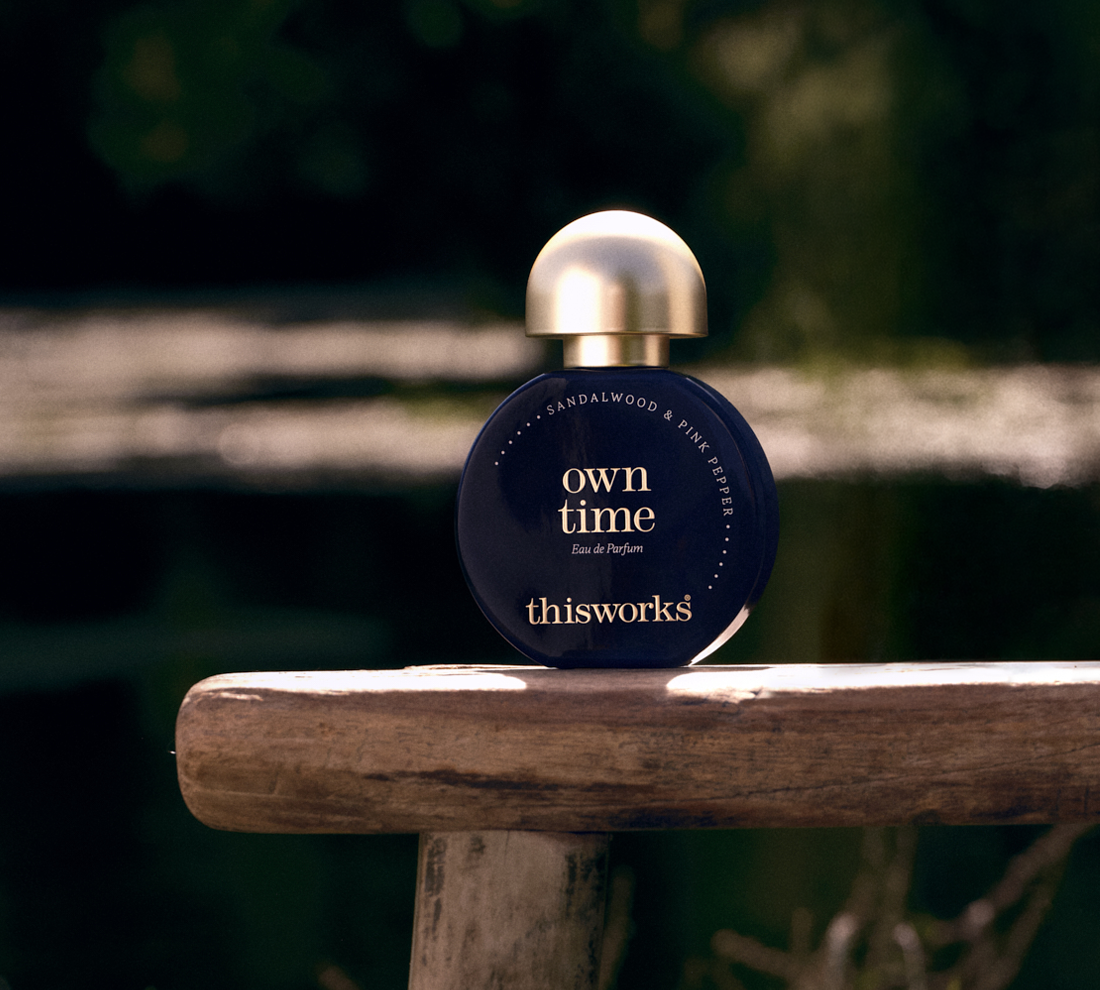 fragranceOwn Time Eau de Parfum featured in Forbes: the rise of Functional Fragrance and bedtime ritualsOur Own Time Eau de Parfum has been featured in Forbes, exploring how Functional Fragrance is redefining perfume layering and becoming part of our evening self-care rituals.read post
 expertsgetting on your nerves? episode 6: train your brainIn episode 6 of getting on your nerves?, Dr Anna Persaud is joined by sleep and neuroscience expert Associate Professor Gaby Badre to explore whether we can train our brains to sleep better. From chronic insomnia and the science of...read post
 sleep hygienewhen the clocks go back: how to help your body clock adjustAs the clocks go back, discover how the seasonal shift affects your sleep and the small changes that can help you adjust, with expert advice from Professor Gaby Badre and Lisa Artis, Deputy CEO of The Sleep Charity.read post
 expertsgetting on your nerves? episode 5: the September switchIn episode 5 of getting on your nerves?, Dr Anna Persaud is joined by medical doctor Dr Lana Gault to explore the September switch – how the transition from summer into autumn affects our physical health, mental wellbeing, sleep and...read post
 expertsgetting on your nerves? bonus episode: getting out of your head, into your bodyIn this Wellness Weekender special of getting on your nerves?, Dr Anna Persaud is joined by wellness expert and integrative therapist Esther Triviño to explore somatic yoga, interoception, nervous system regulation and how movement, breath, sound and sensory cues can...read post
 expertsgetting on your nerves? episode 4: wherever I lay my hatWhy can some people sleep anywhere, while others struggle as soon as their surroundings change? Dr Anna Persaud and Professor Gaby Badre explore sleep adaptability, circadian rhythm, nervous system regulation and how to become a more resilient sleeper when conditions...read post
